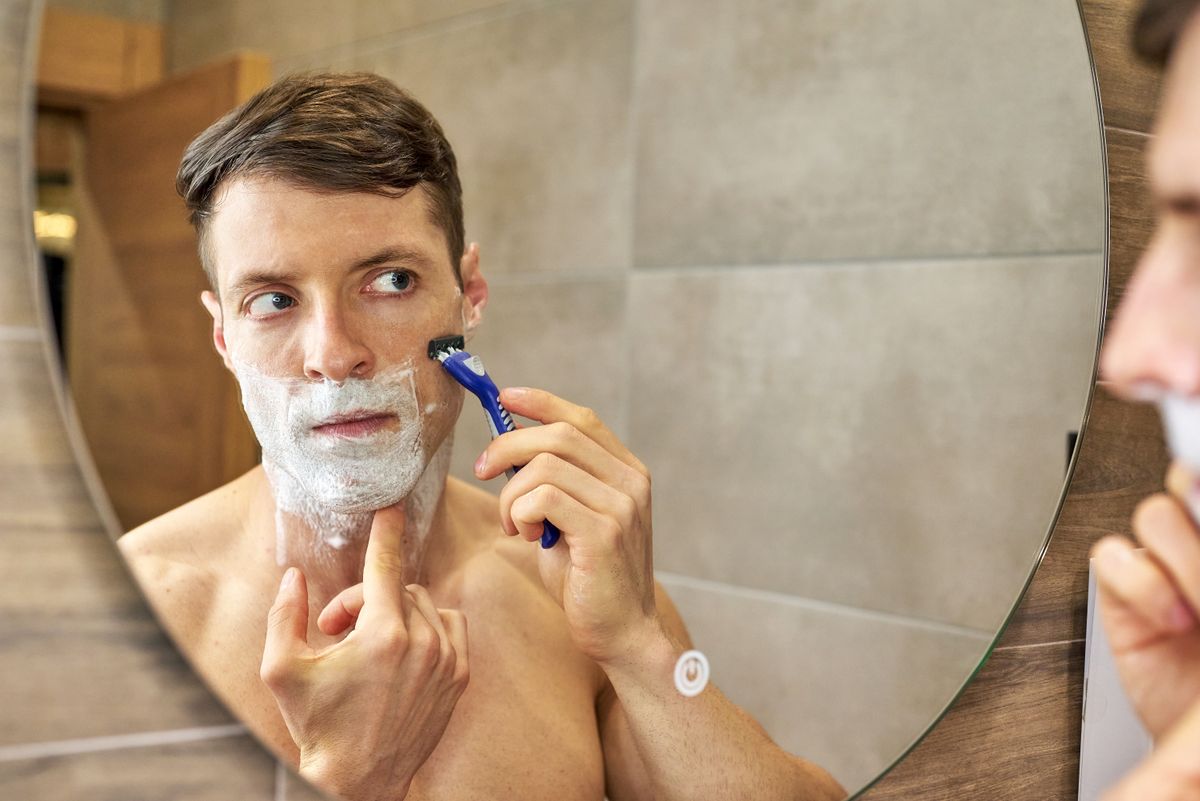
When you are recovering from a shoulder injury -- whether it is an AC joint separation, rotator cuff issue, or post-surgical recovery -- basic daily tasks can become surprisingly difficult. Shaving is one of them.
Here are practical strategies for maintaining your grooming routine without aggravating your shoulder.
The Challenge
Shaving requires reaching, lifting your arm, and sustained overhead or across-body positions -- all movements that are painful or limited after a shoulder injury. Forcing through the pain is not the answer.
Adaptations That Work
Use Your Uninjured Arm
If you normally shave with your dominant hand and that is the injured side, practice using your other hand. It will feel awkward at first, but it gets easier quickly.
Lower the Mirror
Instead of reaching up to a wall-mounted mirror, use a tabletop mirror or prop a mirror on a counter at chest height. This eliminates the need to lift your arm overhead.
Lean Forward
Instead of bringing your arm up to your face, bring your face down to your arm. Lean forward over a sink and let gravity do some of the work.
Use an Electric Razor
An electric razor requires less precision and less pressure than a manual razor, which means less sustained effort from your shoulder muscles.
Break It Into Stages
You do not have to shave your entire face in one go. Do one section, rest your arm, then continue. Pacing is a real strategy, not a sign of weakness.
The Bigger Picture
These adaptations are temporary. The goal is not to avoid movement forever -- it is to find ways to stay functional while your shoulder heals. As your mobility improves through rehab, you will gradually return to your normal routine.
Recovering from a shoulder injury? [Let's get you moving again](/contact).
Related idea: When the floor is the hard part: a low, wide table can stand in for it
Instant Energy Boost through Simple Movement and Stretching Exercises
From The Resilience Flow Network