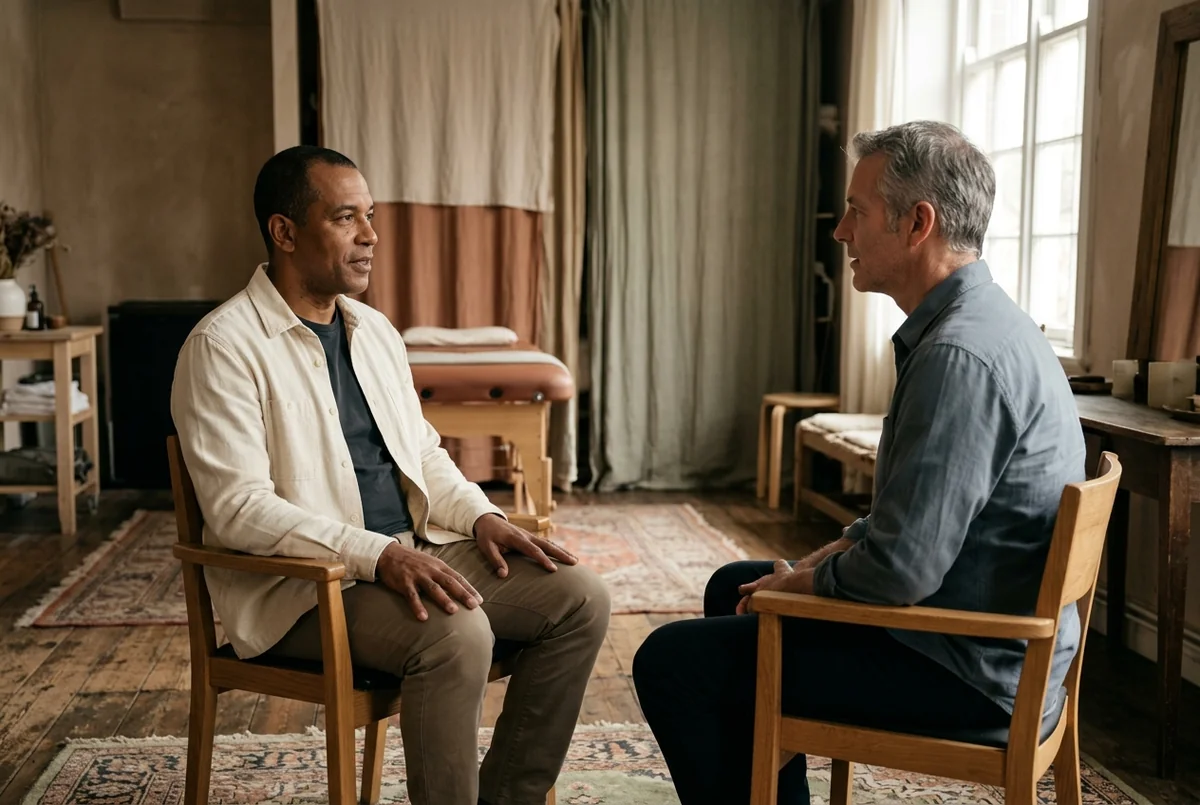
It can take a little time to explain what is bothering you. The painful area is one part of it. There is also the chair you cannot get comfortable in, the walk you have shortened, and the uncertainty about what to do between appointments.
I want room for those details.
The details help shape the work
Movement Solutions is built around one-on-one care with me. We have time to connect what you describe with how a task actually feels and looks during your assessment.
You might say that getting out of the car is harder than getting in, or that a movement is easier when you can use a hand for support. Those differences help us choose what to assess and what to practice.
The plan should make sense to you. I explain what I am proposing, ask for your input, and check whether the approach fits your goals. You can ask for a different explanation or tell me that something does not feel right.
Your feedback belongs in the session
Hands-on treatment and exercise both involve choices. We can discuss positioning, pressure, pace, and what you are comfortable trying. You can pause or decline a technique. You can also change your mind after we begin.
You do not need to share a personal history to receive thoughtful care. Share what you want me to know about the task, your symptoms, or what would help you feel more comfortable participating.
The aim is a working relationship in which we can be clear with each other and adjust as we learn.
If you have been looking for time to explain the whole problem, start with what is most important to you.
How the conversation connects to care
Cozolino’s work on human relationships explores the social context of experience. In this room, I bring that perspective to listening, clear explanations, and space for your feedback.
Ferreira and colleagues’ observational study found an association between therapeutic alliance and outcomes in chronic low back pain. It does not establish that a good relationship alone causes improvement.
Tell me what you would want a first visit to make room for.
Sources and further reading
- Cozolino, L. (2014). The Neuroscience of Human Relationships (2nd ed.). W. W. Norton. Publisher overview; conceptual background.
- Ferreira, P. H., et al. (2013). The therapeutic alliance between clinicians and patients predicts outcome in chronic low back pain. Physical Therapy, 93(4), 470–478. Observational association, not causation.
The practice examples above describe how I approach care. These sources provide background, not a diagnosis or a promise of results.